- Products
- Segments
- Newsroom
- Tools and Resources
- Sustainability
- We are Nexans
- Search
- Contact us
- Compare
- Sign in
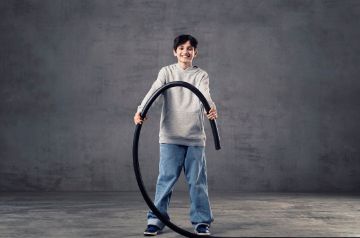

Do you draft declarations of conformity? NEK 400:2026 quickly explained
Jun 22, 2026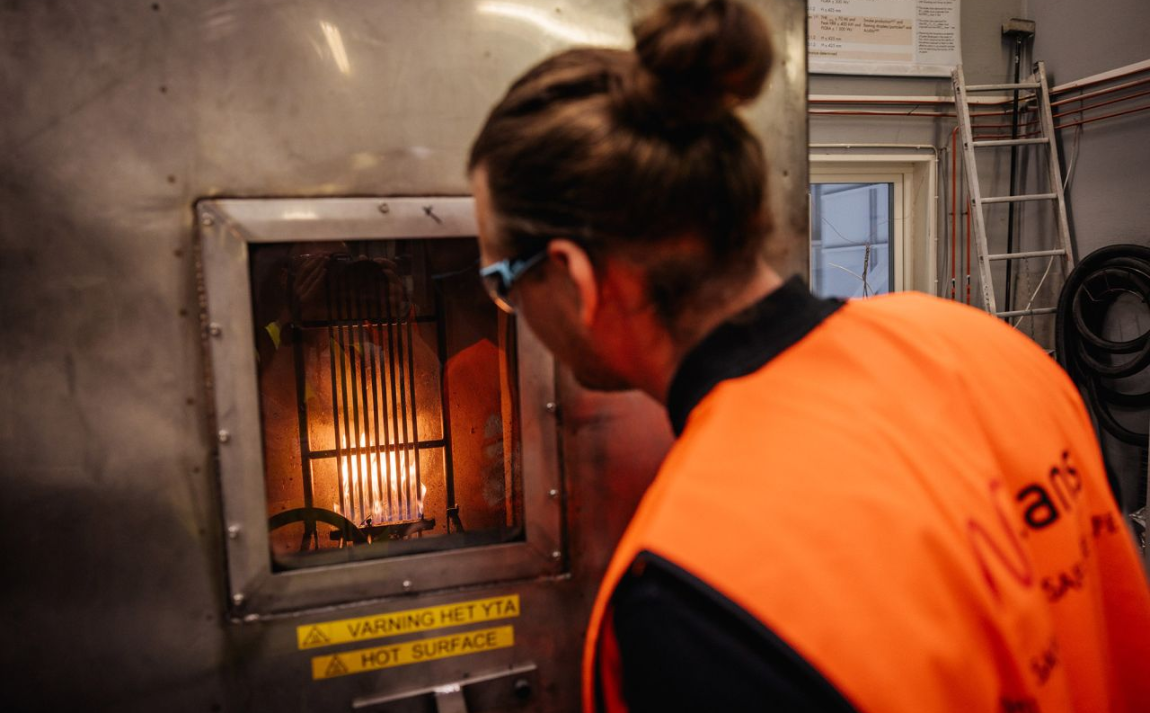
Here are the changes to NEK 400:2026 that will affect your cable selection starting July 1, 2026
When NEK 400:2026 takes effect on July 1, 2026, several specific changes will come into effect that will affect how electricians design, install, and document electrical systems.
Several of the changes presented during the Eliaden seminar directly concern cable type selection, temperature limits, material properties, and fire safety.
Here are the most important changes, which will be crucial when declaring compliance with the 2026 edition.
1. New fire safety requirements for cables – Dca-s2d2a1 becomes the new standard
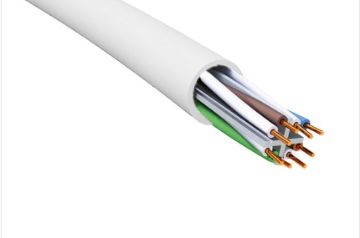
The most significant change in NEK 400:2026 regarding cables is the changes to the requirements for cable fire safety properties. In practice, CPR class Dca-s2d2a1 will become the new standard in many fixed installations.
In NEK 400:2022, Eca was still sufficient for large parts of standard installations. Now, the minimum level is being raised significantly.
The rationale for the change relates to fire safety and the desire for:
- less smoke generation
- less corrosive fumes
- reduced fire spread
- better conditions for evacuation and rescue operations
In practice, this means that Low Fire Hazard cables will become the standard choice in far more installations than before.
Relevant sections: Part 428, 805.521.1.4, Part 521, Part 527
2. The 50 MJ/m requirement is removed, but there is a strong focus on escape routes
One of the most practical changes in NEK 400:2026 is the removal of the so-called “50 MJ/m requirement.”
This requirement was previously used to limit the fire energy of cables installed per running meter of escape route.
In practice, this has often been difficult to calculate.
Removing the 50 MJ/m requirement simplifies design, but requirements still apply regarding the limitation of the number of cables in escape routes and how the cables are installed. Wiring systems in escape routes must under no circumstances obstruct evacuation.
Relevant sections: Changes to NEK 400-4-42 related to protection against thermal effects and fire.
3. The manufacturer may specify its own maximum temperatures
NEK 400:2026 allows cable manufacturers to define their own maximum temperatures for permissible conductor temperature. In such cases, the manufacturer must also specify the current-carrying capacity for the given installation methods.
Relevant sections: NEK 400-5-52 with new temperature-related sections and tables.
4. Equipment must be able to withstand the temperature that will occur at the equipment’s terminals
Where a conductor reaches a temperature exceeding 70 °C, it must be ensured that the connected equipment is suitable for the resulting temperature that occurs at the equipment’s terminals.
For example, there may be a protective device at one end and the load at the other.
A practical example might be:
- a cable rated for a conductor temperature of 90 °C
- connected to equipment rated up to 70 °C
In this case, the weakest link in the installation will determine the permissible temperature. In the case mentioned, one can then use the current-carrying capacity tables for 70 °C to limit the current so that the conductor temperature does not exceed 70 °C.
This is important in high-load installations, or where the conductor temperature exceeds 70 °C for other reasons. In addition to assessing the current-carrying capacity for the installation method, for conductor temperatures above 70 °C, one must also evaluate whether the equipment is suitable given the temperature that arises in the equipment’s terminals.
5. New Material Terms: Thermoplastics and Thermosets
NEK 400:2026 introduces new terms for categories of insulation materials. These are:
- thermoplastics
- thermosets
These are categories that encompass several types of materials.
For example, PE and PVC are thermoplastics, while PEX (XLPE) and EPR are thermosets.
Thermosets have a permissible conductor temperature of 90 °C, while thermoplastics have a permissible conductor temperature of 70 °C. Note that manufacturers may specify their own limits with regard to section 3, and that there are, for example, thermoplastics that can withstand 90 °C and can therefore use the table for thermosets. It is recommended to consult the manufacturer’s data sheet.
Relevant sections: New tables and definitions in NEK 400-5-52.
Remember the Transition Period
There will be a six-month transition period following the publication of NEK 400:2026.
This means:
- NEK 400:2026 will be the applicable standard as of July 1, 2026.
- NEK 400:2022 may also be used for design work through 2026.
- Installations designed in accordance with NEK 400:2022 must be carried out and completed by the end of 2027.
For many businesses, the fall of 2026 will therefore be a crucial period for training, inventory adjustments, and selecting new cables. For exemption rules, please refer to the DSB.
Nexans is ready for NEK 400:2026
Over time, Nexans has built up a complete Low Fire Hazard product range and is well prepared for the transition to the new requirements.
Products such as:
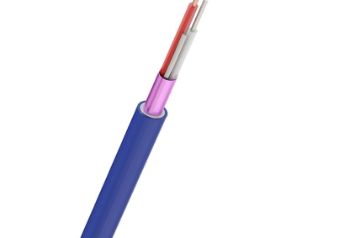
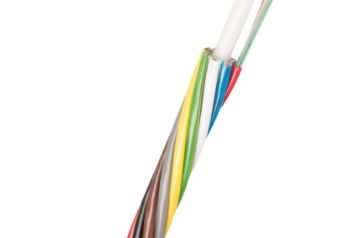
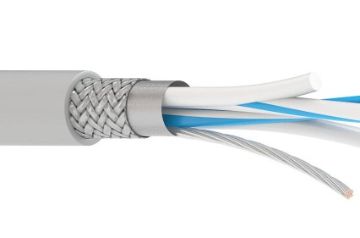
- Low Fire Hazard PR EASY
- TFXI EASY as an alternative to RVK/FLEX
make it easier to meet the new requirements without compromising on ease of use.
The EASY series is designed to be:
- easy to strip
- easy to handle
- available with smart packaging solutions
Yes, there will be many new cable names to learn going forward. But with Nexans’ conversion tables and the EASY series, it will be easier to find the right alternatives to traditional PVC cables.
Nexans is ready for NEK 400:2026, and makes it EASY to choose the right cable.
Nexans = cables to be proud of.
SEE MORE: Overview of our Low Fire Hazard cables
Source: Eliaden seminar on NEK 400:2026
Our websites
Select your country to find our products and solutions
-
Africa
- Africa
- Ghana
- Ivory Coast
- Morocco
- North West Africa
- Americas
- Asia
- Europe
- Oceania